For expats7 min
Building in Costa Rica from abroad: five roof decisions you make before you arrive
You are hiring an architect in Guanacaste or Nosara from a kitchen table in Denver or Toronto. These are the five roof questions worth settling in that phase, while changing your mind still costs an email instead of a change order.
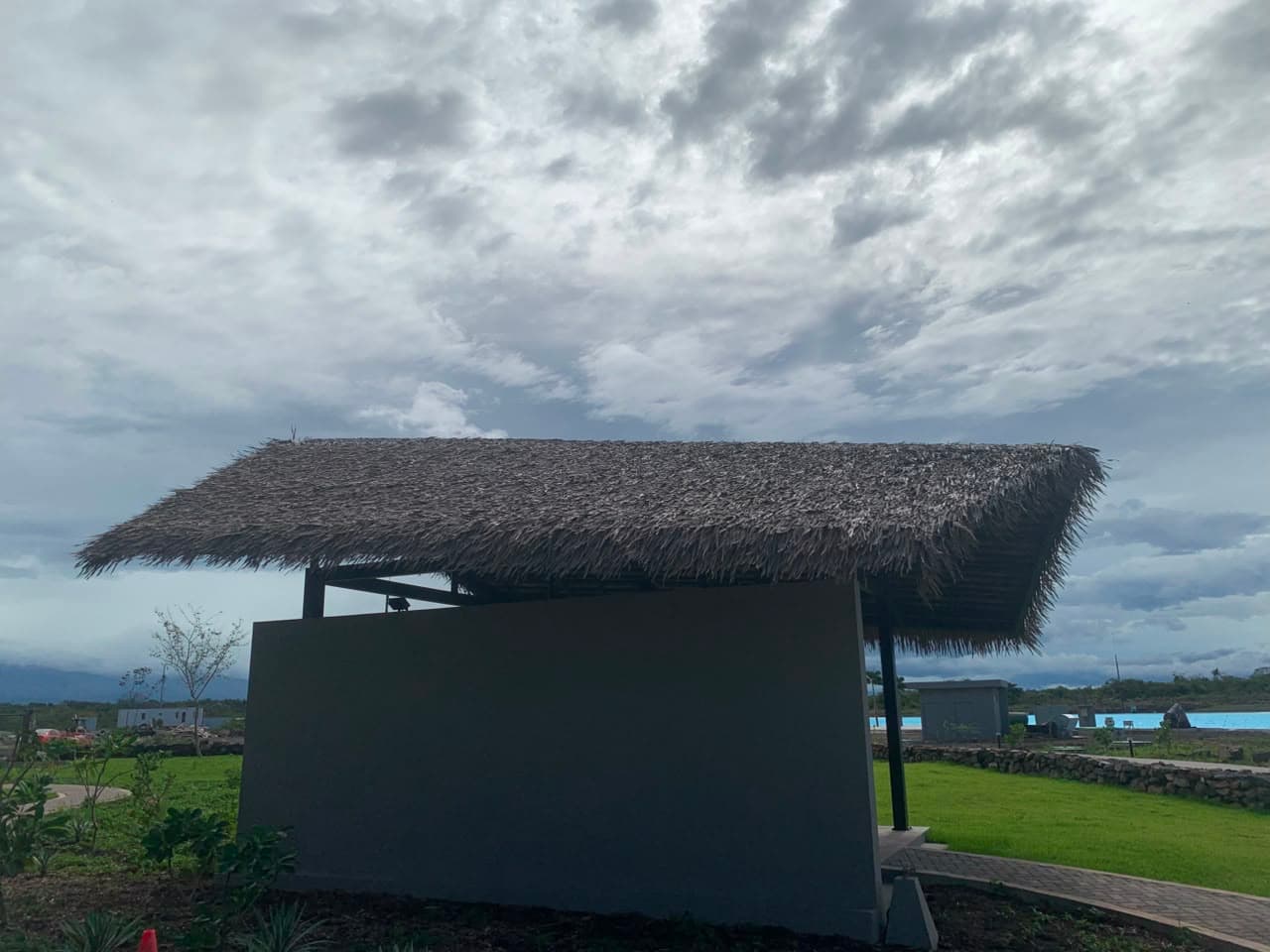
A Costa Rican roof does a harder job than the one you left behind. It takes UV at eight to ten degrees north, salt-laden wind off the Pacific, a rainy season that delivers a year of northern rainfall in six months, and — under a natural thatch roof — a permanent invitation to insects, rodents and mould.
None of that is a reason not to build the open-air house you came for. It is a reason to decide five things early, because each of them is cheap to settle in schematic design and expensive to revisit once the roof plane is drawn.
1. Whether the palapa is decorative or structural to the plan
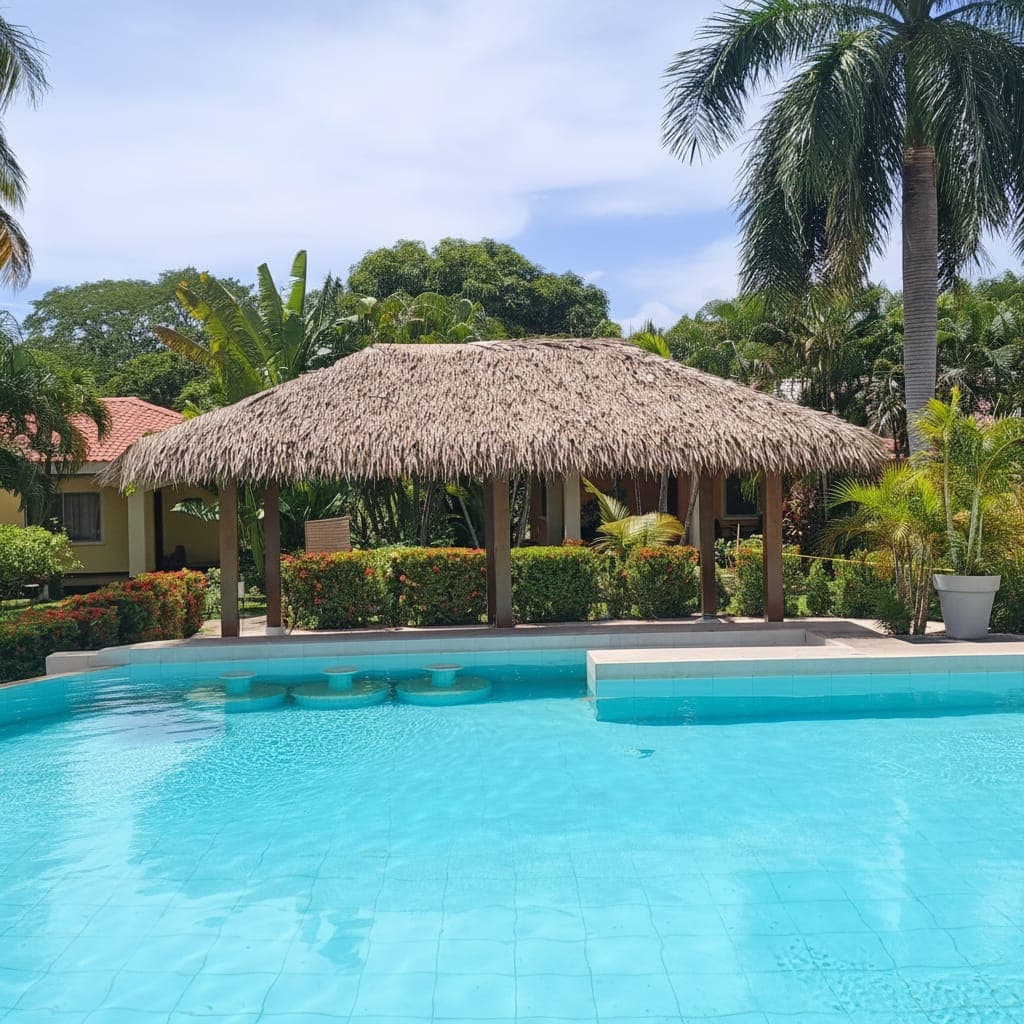
There is a difference between a house with a thatched rancho in the garden and a house whose living space is under thatch. The first is an amenity you can add later. The second sets the geometry of the whole plan: spans, ceiling height, where the walls stop and the shade begins.
If the thatch roof is where you will actually live — the great room, the terrace, the pool bar — say so in the first meeting. It changes the structural grid, not just the finish schedule.
2. The pitch, before the silhouette is fixed
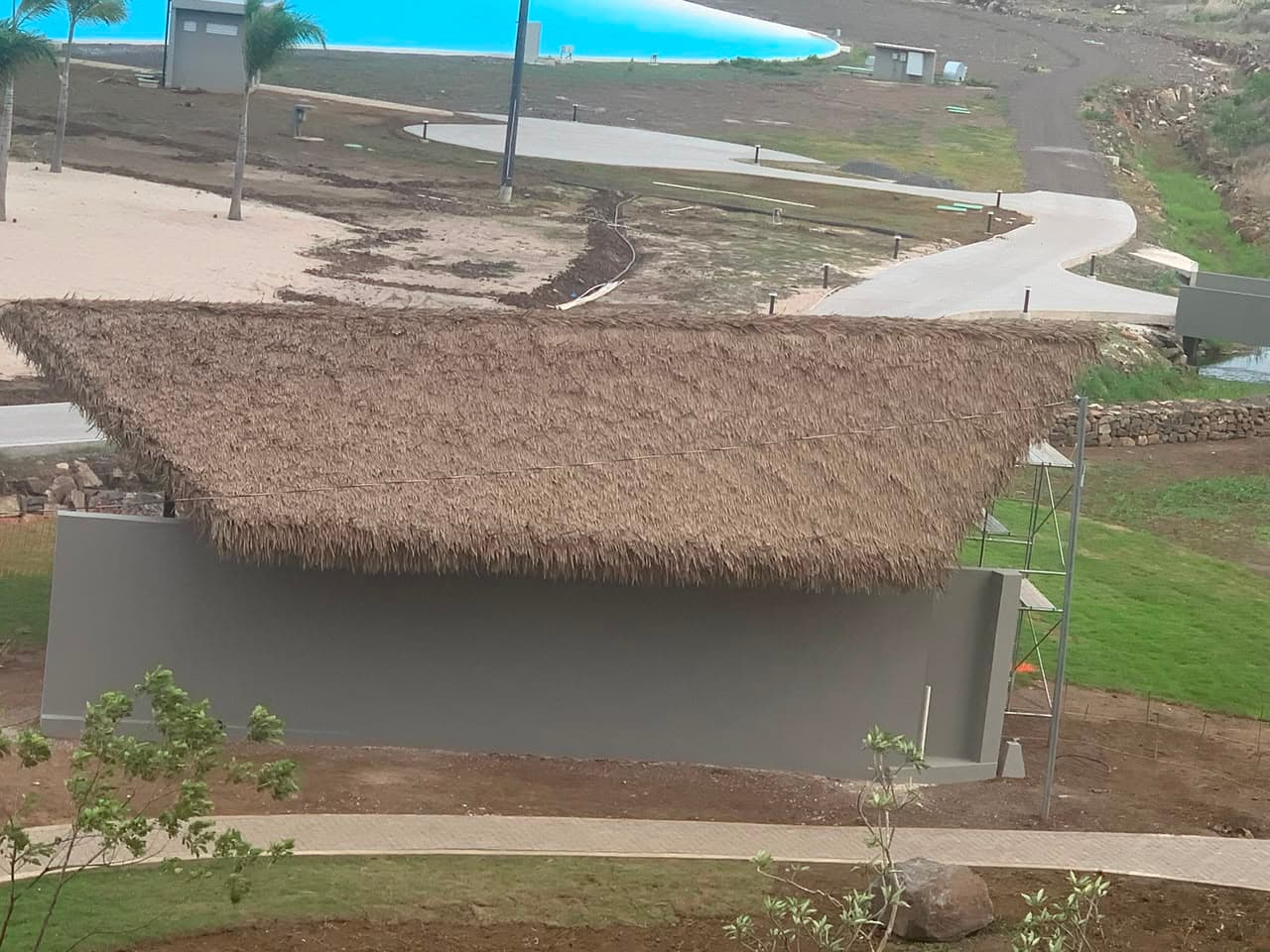
Synthetic thatch needs a minimum pitch of 18° to shed water between laps. Below that the system stops being watertight, no matter how well it is installed. Renderings, though, love a low, wide roofline — and a roof drawn at 15° for the picture has to be redrawn later.
3. Natural or synthetic, decided on twenty-year terms
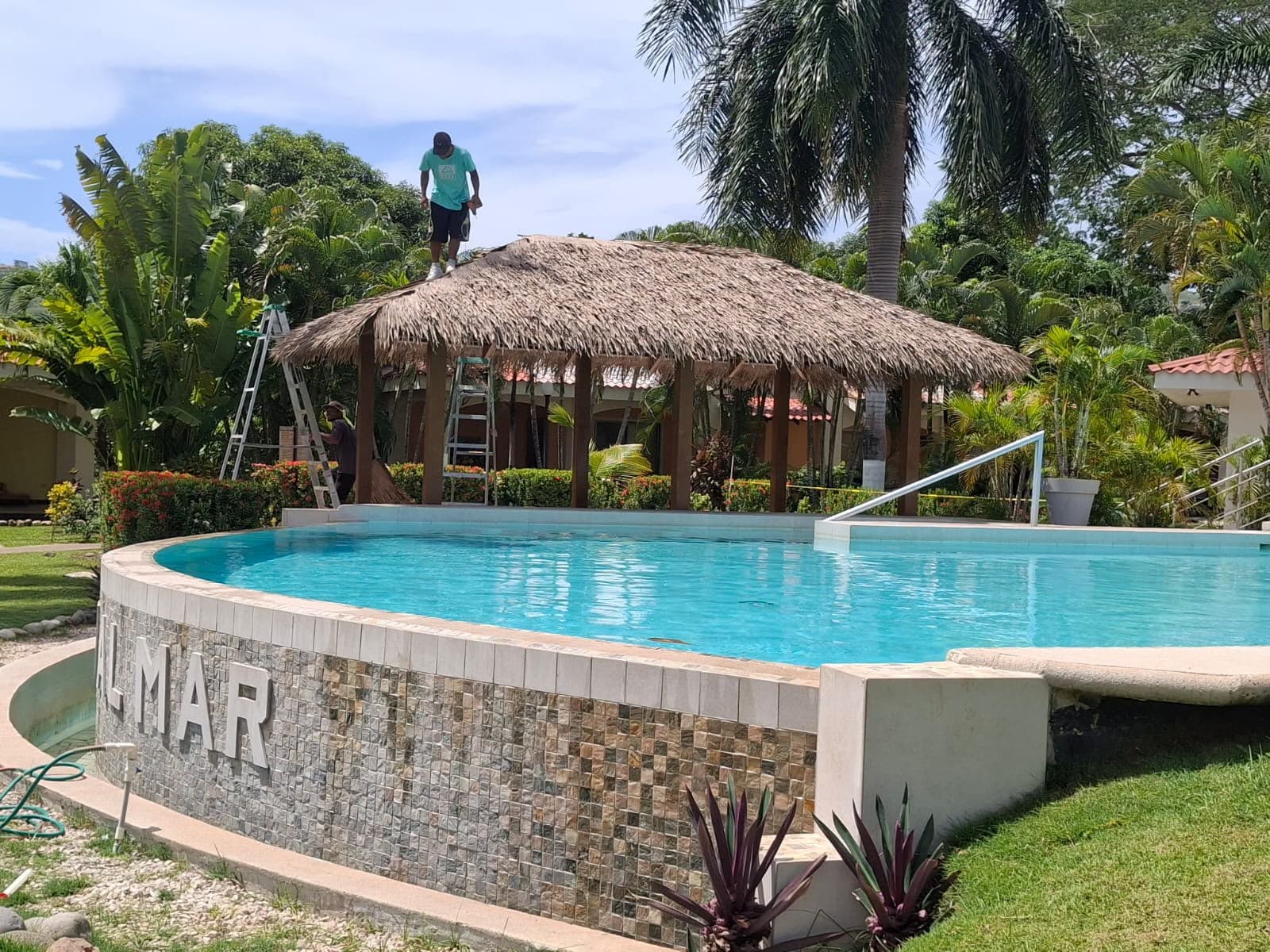
Natural palm thatch is beautiful and it is genuinely traditional. It also has to be re-thatched every three to five years, and each re-thatching means scaffolding, an unusable area, a crew in your house and a bill nobody put in the construction budget.
If you will be in Costa Rica part of the year, add one more line to that math: every one of those interventions has to be organized, supervised and paid for from somewhere else.
4. Whether anyone has asked for the fire documentation yet
For a private home the fire question usually arrives from the insurer rather than the plan reviewer. It arrives all the same, and it arrives late — often when the policy is being written and the roof is already up.
A roof covering tested Class A under ASTM E108 gives your broker a document to file. A vegetal roof cannot produce one, and some policies price that in heavily or exclude it outright.
5. Who maintains it when you are not in the country
This is the question that separates a house that ages well from one that greets you with a surprise every December. Whatever roof you choose, write down who inspects it, how often, and what they are looking for.
- With synthetic thatch the honest answer is close to nothing: a visual check after storm season and clearing debris from valleys and gutters.
- With natural fibre it is a real maintenance contract — treatment, patching, and a full re-thatch on a cycle.
- Either way, the property manager should know which one they have signed up for before you leave.
What to send your architect
If your project is at the stage where these questions are live, the specification package — panel data sheet, test documentation, construction details and take-off per m² — is issued by palm.cr, the authorized distributor, and can go straight to your design team in Costa Rica.